During the holiday season, which for me is stressful more often than not, I find it useful to change my perspective and look at the big picture. Most years, this means reminding myself that no matter how much my family members irritate me (after too much time spent in close quarters), I still love them, and even though I have to travel pretty far to be with them, I'm still glad to be in good company over the holidays. This year however, I switched my mindset in a new way: I muted the voice inside my head that rants and raves about the poor decisions made by the government (you know, the usual, policies that will cause harm to human and environmental health). What did I pay attention to instead? The little things!
Over the past week I experienced small moments of delight whenever I noticed a simple action taken by my family members to reduce their environmental footprint and protect their health. Take for instance my mom, who saves water every time she takes a shower. As you can see in the photo above, she keeps large juice bottles in the bathroom so that she can fill them with the cold water that runs out of the tap before the hot water makes its way from the heater in the basement to the shower on the second floor. Later, she uses the juice bottles to fill a watering can which she uses on her indoor plants. Brilliant!
There were little things of a green nature in my brother and sister-in-law's home, too, like organic milk. Keeping pesticide-laden feed, copious amounts of antibiotics, and unnecessary synthetic growth hormones away from dairy farms means healthier cows, healthier humans, fewer superbugs, and a safer environment. My brother also attached his indoor Christmas lights to a timer so that they wouldn't run all night, and my sister-in-law told me the car sits unused for one or two weeks at a time. In the kitchen I found dish soap containing only natural fragrances and no phthalates. The list goes on!
I received some great eco-friendly gifts, too, like a bottle opener made from post-consumer materials that is completely recyclable, an energy-efficient electric blanket that will let me turn my thermostat even lower than I already do overnight, and a teflon-free rice cooker made of stainless steel in a double-boiler configuration. At a time of year marked by unnecessary consumption, excessive gift-wrapping, food waste, and high carbon emissions from extensive travelling, it was an absolute pleasure to delight in these lovely things.
What green actions does your family engage in? What green products did you receive as gifts?
Showing posts with label water efficiency. Show all posts
Wednesday, December 28, 2011
Tuesday, August 16, 2011
Rapunzel, Rapunzel, Let Down Your Hair
I'll cut right to the chase for those of you who are confused by the title of this post. I was thinking in the shower this morning that the water I use to wet and rinse my hair when washing it makes up the vast majority of the water I use when I bathe, and this made me wonder whether choosing to keep it long is an environmentally unfriendly act.
Unlike Rapunzel, my hair isn't blonde, and compared to her, I have nothing to complain about when it comes to keeping my mane tamed. There's a reason they don't show her washing and drying her hair in last year's Tangled animated movie: it would have eaten up half of the running time! Still, my hair is thick and long (down to the middle/small of my back, and not layered), at least by non-fairy tale standards, and because I've used conventional hair products so sparingly over the years and only ever dyed my hair once, it's in very good condition. Since it suits me at this length, there's simply no need to change my hair style. Until I consider the water and energy waste involved in maintaining it!
This summer I've been really good with turning off the shower while I lather shampoo into my hair, but rinsing it and the occasional conditioner out requires a lot of water, especially since my hair is so thick. My showers seem to take forever! On days when I don't need to wash my hair (thankfully, two days out of three) I can zip in and out of the shower in a minute or two. Hair washing days... I'd rather not admit how long I spend under the running water.
Then there's the drying. I'm happy to let the heat and sun of the summer take care of that, but it's just not an option in colder weather. A hair dryer is necessary so I don't freeze to death in the winter, and I don't think those gadgets come in energy efficient models. Even so, it takes 20-25 minutes to get my hair completely dry. Please don't make me calculate the kW use associated with that process two to three times a week!
The question is, should my environmental ideals trump my aesthetic ideals? Maybe my long hair isn't an aesthetic ideal as much as a vanity-driven obsession. After all, the more often I am complimented for my hair, the bigger my ego gets. In that case, taking the plunge and opting for a very short hair style for green reasons seems acceptable and potentially good for my modesty. If I'm already the type of person who doesn't wear make-up, rarely accessorizes my wardrobe with matching jewellery, and almost never applies polish to my nails, why put so much importance on my hair? On the other hand, this feels like a pretty drastic move.
I'm stumped - what should I do?
Photo of Rapunzel doll used under Creative Commons from Jenny (jollyserenity27/flickr).
Photo of long hair being cut used under Creative Commons from alachia (flickr).
Friday, July 22, 2011
How to Be Wasteful: Grow a Grass Lawn
It was a few weeks ago, over the holiday long weekend at the start of the month, when I started thinking about writing a post on the topic of grass lawns. My mother told me she had heard that we have President Roosevelt to thank for introducing British style lawns to the US. He was apparently very impressed with how neat and tidy English golf lawns looked. However...
... this is what lawns look like in my neck of the woods these days (and I've seen much worse). After an unseasonably rainy spring, we've had an unseasonably dry summer. Not only have we received very little precipitation, but I haven't seen a cloud in so long that I forget what they look like. Grass suffers in these conditions while it thrives in the damp of the British countryside. If only President Roosevelt had been surrounded by advisers with expertise in botany and climatology. Perhaps he could have been swayed to rethink the landscaping around the White House and grow lawns with grass alternatives and other types of ground cover more suitable for hot, dry conditions - homeowners would be mimicking a more sustainable landscaping strategy. But I'm getting ahead of myself.
Briefly, let's think about what makes grass lawns a bad idea. A lot of this will sound familiar to you if you read my post on golf courses last year. As I mentioned above, hot and dry weather stunts grass growth while promoting the proliferation of unwanted plants that think sunshine and dry soil are lovely. The common reaction is to kill weeds with pesticides and boost grass growth with fertilizer. Both are toxic, both are dependent on fossil fuels: that's a 1-2 punch to the environment's gut and our health. It gets worse when you factor in gas-powered mowers, some of which emit more pollution than cars. Weed whackers and leaf blowers are similarly hazardous. But my favourite lawn-related environmental no-no is the intensive use of water. When grass turns brown it's not dead, it's reducing its need for water! In the end, watering a brown lawn only makes matters worse by signalling the grass that it can return to its green, water-thirsty growth mode! My ultimate pet peeve is...
... lawns being watered at midday, when the sun is at its peak and evaporating mist and droplets before they even fall on the grass. I took this photo yesterday, on the hottest day of the summer. We actually broke a record for July with 37.5 C (100 F), which felt like the upper 40s (115-120 F) with humidity factored in. Note the wet stones and pavement, and how the grass is only receiving half of the water coming out of the sprinkler. I suspect the photo looks dark because my camera couldn't handle the brightness. I took this shot at 1 pm when the sun was directly overhead - everything but the porch was in full sun, at a UV level of 11, no less.
What are our options? With more hot and dry weather on the way for the foreseeable future (global climate change, anyone?), we are forced to focus on adapting. While some non-toxic pesticides and fertilizers do exist, including products you can put together at home, you'll still have to mow and water like everybody else. Switch to an electric mower and set its blade height to leave the grass longer. Be efficient with your sprinkler! Make sure the spray only reaches as far as the edge of your lawn (not the pavement beyond), water only in the early morning when the sun is low on the horizon and the air is somewhat cool, and keep the sprinkler going only as long as necessary.
For those of you who can make a bigger commitment, consider planting hardier varieties of grass that are suited to your region's climate. Add more trees to your property that keep your lawn in the shade. Experiment with drought-tolerant grass alternatives and extend your flower beds farther into your lawn to reduce the overall amount of grass on your property. Your local garden centre staff can tell you about ground cover alternatives, and if you can afford it, why not hire a landscaping company to do a complete makeover of your front yard and turn that lawn into a native plant habitat garden? Here's what that looks like in my neighbourhood:
My favourite solution is...
... putting that soil to good use and growing veggies, like in this front yard a few blocks from where I live. If the image looks fuzzy it's because my camera caught the high evening humidity from a few nights ago. Remember, every little bit counts. Choose the options that work for you and your living situation and run with them. We don't need award-winning botanical gardens in every yard!
Do you have any tips for sustainable landscaping?
Monday, April 18, 2011
My New Second Home
I work in the coolest office building at the coolest site ever. EVER.
This is the directory in the Centre for Green Cities at Evergreen Brick Works. Note all the environmental NGOs! I'm on Level 4... can you guess who I work for?
The Centre for Green Cities is a LEED Platinum building and heritage site rolled into one - with a green roof no less. It's such a cool place that I even took a picture of a toilet. It's not just any toilet: pull up for number one, push down for number two, and it's low-flow either way! Other building features include high-efficiency insulation, harvesting of waste heat, solar panels, recycled/salvaged building materials, and many more.
This may be old hat to many of you, but sinks with motion sensors are still awesome in my books. I used to work at a hospital and washed my hands up to twice an hour but couldn't turn the tap off while lathering because that would defeat the purpose of using soap in the first place. Problem solved at the Centre for Green Cities. Also, note the Dyson hand dryer! It works in 12 seconds, but I routinely use it for only five seconds because my hands are so close to dry by then that I can let them air dry on my walk back to my desk with no fear of contamination - because there is no door to open on the way out of the washroom, just a zig zag! *Happy sigh*
The shared kitchen features a cupboard full of plates, bowls, glasses, and mugs, as well as the usual cutlery in a drawer below it, two countertop compost bins, non-toxic dish detergent, and a high efficiency dishwasher. The best part? People seem to actually take turns unloading the dishwasher, and rarely does anything pile up in the sink. Shared responsibility is a beautiful thing.
Yup, that's a Prius and a Mini Cooper at the AutoShare spaces in the parking lot.
Unfortunately there were no electric vehicles being charged when I was out snapping pictures last week, but I've seen them before! They exist! They're cool! They're at my building!!
Okay, some history about the site: for 150 years, bricks were manufactured here that built some of Toronto's landmark buildings. About 30 years ago, the factory shut its doors for good, and the clay quarry was largely filled in with earth from downtown excavations for the construction of office towers. The land now belongs to the City of Toronto and is being preserved for its historical and geological significance. Evergreen, a charitable organization with the mandate of making cities more livable, has taken out a long lease of the site and spent the last ten years building around the remains of the original structures to create an environmental community centre that features a farmers' market, garden centre, year-round workshops and seminars, school and camp programming for children, and frequent naturalization projects.
Situated in the ravines of the lower Don River watershed, it's a stunningly beautiful place. Interestingly, it's also located on a flood plain, so there's actually a flood hotline to call in the morning when overnight rains are heavy, especially at this time of year when the ground hasn't thawed enough to absorb lots of surface water. In this picture you can see leftover bricks from the factory placed in ditches to help move excess water. The mounds of soil will eventually be planted with native grasses that will help keep the dirt in place. Oh, and the graffiti isn't going to be removed because it's part of Toronto's cultural heritage. Neat!
The largest map of Toronto in the world with metal pipes depicting the various river watersheds. This is going to be a living wall in the summer, as the pipes will bring rainwater down through the structure, and a pump will ensure continuous flow!
This is one of 15 cisterns placed around the site that collect rainwater for use in the gardens and washrooms. The water is also used to help cool the roof above my head!
This is the pond in what remains of the quarry. I can get to this spot in less than five minutes after leaving my desk. What a treasure.
So, do you know who I work for? I'll give you some clues that will lead you to the answer with some online searching:
- I'm an intern.
- My position exists thanks to the Sustainability Network and may not last terribly long.
- I'm helping to make my ENGO's outreach more inclusive of diverse communities.
Tuesday, March 22, 2011
World Water Day
In honour of World Water Day today, let's watch Annie Leonard's Story of Bottled Water.
Next time you feel tempted to buy a bottle of water, think about the oil and energy that goes into making the plastic bottle, the downcycling that occurs once you toss the bottle into your blue bin, the fact that the water itself isn't from some pristine spring but rather a municipal source - which is already clean enough to drink from and much, much cheaper than the bottled version!
Looking for water-saving tips? Here are 100 ways to conserve. Can you add any more ideas to the list?
Thursday, March 17, 2011
Green Habits
What makes us conserve water and energy, divert waste from landfills, and choose alternatives over the car? How does Canada stack up to other countries? The Paris-based Organisation for Economic Co-operation and Development (OECD) took a stab at answering these questions with a survey in 2008. 10,000 people were polled in Australia, Canada, the Czech Republic, France, Italy, Korea, Mexico, the Netherlands, Norway, and Sweden. The results are in, and The Globe and Mail designed some colourful graphics to help explain it all. I thought it might be neat to get your comments on some of the interesting points in the report.
Water
Energy
Waste
Transportation
You might be interested in reading the full article or the OECD report. The graphics are quite useful. Make sure to come back to this post afterwards - please help me make sense of some of these stats!
Photo credits: water droplet; wind turbine; landfill; traffic.
Water
- Canadians and Mexicans use about twice as much water per person as residents of France and the Czech Republic.
- The most common household water-saving device in Canada is the low-flow shower head, compared with water-efficient washing machines, showers, and toilets in Australia and Korea.
- When people have to pay for household water use, consumption drops by 20%.
Energy
- In Canada, only half as many people use thermal insulation compared to efficient light bulbs, and even fewer have installed efficient furnaces.
- Hydro bill = conservation of electricity.
- Most homeowners aren't willing to pay much more for renewable energy.
Waste
- Canada, Australia, and Sweden recycle twice as many products as the Czech Republic and Mexico.
- Young people produce 10% more garbage than their parents.
- Canadians are better at properly disposing of used batteries than expired medication.
Transportation
- When commuting, the proportion of Koreans using public transportation is almost as large as the proportion of Canadians driving cars (around 50%).
- People state they would use public transportation if it were faster and cheaper, and they want transit stops no farther than 15 minutes from their homes.
- On average, a 20% spike in gas prices would prompt motorists to cut back on their driving by 8%.
You might be interested in reading the full article or the OECD report. The graphics are quite useful. Make sure to come back to this post afterwards - please help me make sense of some of these stats!
Photo credits: water droplet; wind turbine; landfill; traffic.
Saturday, February 26, 2011
If It's Yellow, Let It Mellow
Many years ago, I participated in the national youth volunteer-service program called Katimavik ("meeting place" in Inuktitut). As one of a dozen youth living together in the same house, I came to see environmental efforts as not only an ideal, but a necessity for getting through the day. Even after switching to evenings for my showers, I still had to be quick about it if I wanted anyone else to have hot water after me. Likewise, we kept our utility bills low by turning the thermostat down in the winter - in northern BC, no less - and saved money on gas by taking public transit to our volunteer placements. These are behaviours I continue to practice.
As you can probably guess from the title of this post, we also committed to the selective flushing mantra, "if it's yellow, let it mellow; if it's brown, flush it down". The only time this caused a problem was when we embarked on a weekend road trip, and the last person to use the bathroom before we left didn't have the presence of mind to make an exception to the rule. Please note: after two days, pee in the toilet smells bad!
I'm curious to know whether any of you save water in this way in your homes, and if you don't, what the barriers are. However I'm also writing this post because I recently came across a great public service announcement video published by a Brazilian environmental organization. Check it out:
Pee During Shower (english subtitles) from Fernandosanches.net on Vimeo.
It was Jen at the Clean Bin Project blog who posted the video at the beginning of the month, and I'm happy to report that she received a lot of positive comments. More than half of the readers admitted to having done this a few times, if not regularly, while those opposed to the idea cited cleanliness and squeamishness issues as impediments, as well as the idea that "there's something unacceptable about it". So here are my arguments: as far as I understand it, if you're healthy, your urine is sterile. In other words, we can't catch anything from each other by coming into contact with each others' pee unless our immune systems are compromised, in which case we're probably more likely to catch a cold or the flu. To minimize any lingering smell, peeing at the beginning of your shower closest to the drain should do the trick. Remember, the end result of this activity is that once a day, you're not flushing the toilet: instead, you're peeing in the shower while already using the water to clean yourself - it's a direct grey water system. As for whether this act is inherently right or wrong, that depends on your upbringing and the beliefs you choose to value. In my opinion, it's much more of a travesty that we put drinking water into our toilets only to soil it with human waste and regularly use up to 13 litres of water to rinse away a couple hundred ml of mostly sterile urine. To me, that's what's unacceptable about the present situation.
Your turn: do you let it mellow when it's yellow? Do you pee in the shower? If you don't do either, what are your reasons?
Wednesday, January 19, 2011
Levi's New Jeans Line Misses the Point
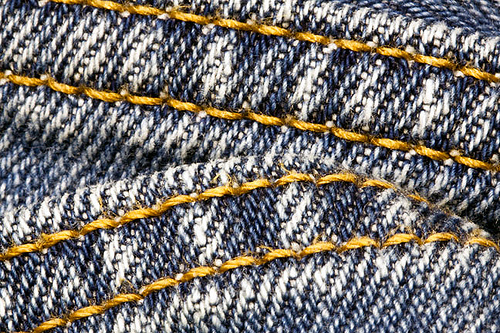
Apparently Levi's has developed a new line of jeans that uses 28% less water during its manufacturing. Specifically, the amount of washing needed to soften the denim has been reduced, and while I'm happy that 16 million litres of water will be saved, I'm left wondering just how much we should be congratulating the company.
I know, I know, I'm an idealist, and it gets in the way of my optimism such that every step in the right direction only serves to highlight everything else that isn't being done. It's hard for me to sit idly by while the general public applauds small efforts like this but remains ignorant of other issues that remain unaddressed. What can I say, calling this new line of jeans Water<Less reminds me of greenwashing. Growing cotton, producing denim, and manufacturing jeans is hugely water-intensive even if you don't bother to stone-wash the pants! Hiding this fact by tricking consumers into believing the jeans were made using waterless manufacturing techniques is... well, I guess it's the norm these days.
So what's all the fuss about?
See what I mean, about how slightly reducing the amount of water used to soften the jeans is only great if you remain ignorant of the rest of the steps involved from field to closet? Well, I'm still trying to be a more optimistic person, so I'll work on feeling grateful that Levi's has taken a step in the right direction. Meanwhile, I'll buy my next pair in a thrift shop, donate them or find an alternate use for them once I'm done with them, and keep you apprised of any other environmentally friendly solutions that Levi's and their competitors come up with!
How about you? What's your closet filled with? Have you discovered brands or local artisans that are trying to do good by the environment when they make clothing?
Photo credits: close-up of jeans; cotton field.
I know, I know, I'm an idealist, and it gets in the way of my optimism such that every step in the right direction only serves to highlight everything else that isn't being done. It's hard for me to sit idly by while the general public applauds small efforts like this but remains ignorant of other issues that remain unaddressed. What can I say, calling this new line of jeans Water<Less reminds me of greenwashing. Growing cotton, producing denim, and manufacturing jeans is hugely water-intensive even if you don't bother to stone-wash the pants! Hiding this fact by tricking consumers into believing the jeans were made using waterless manufacturing techniques is... well, I guess it's the norm these days.
So what's all the fuss about?
- Growing cotton involves a great deal of water, fertilizer, and pesticides: just ask the people living around the Aral Sea how the cotton industry, using unsustainable agricultural practices, has caused an environmental, economic, and human health disaster that is not going away any time soon.
- Processing cotton to make denim requires more water, but also paraffin and synthetic indigo, which present a double whammy of environmental degradation because (1) they are petroleum products and (2) they're probably dumped directly into surface water adjacent to the plant.
- Weathering the denim to give it that worn look (I've never understood this), while often still called stone-washing, is more likely to make use of water and toxic chemicals than good, old-fashioned rocks. It's funny how the energy that goes into stone-washing, fabric softening, and sandblasting the jeans actually serves to shorten their lifespan and increase consumer demand. No, wait... that's not funny.
See what I mean, about how slightly reducing the amount of water used to soften the jeans is only great if you remain ignorant of the rest of the steps involved from field to closet? Well, I'm still trying to be a more optimistic person, so I'll work on feeling grateful that Levi's has taken a step in the right direction. Meanwhile, I'll buy my next pair in a thrift shop, donate them or find an alternate use for them once I'm done with them, and keep you apprised of any other environmentally friendly solutions that Levi's and their competitors come up with!
How about you? What's your closet filled with? Have you discovered brands or local artisans that are trying to do good by the environment when they make clothing?
Photo credits: close-up of jeans; cotton field.
Friday, January 7, 2011
No Impact Week: Day 6 - Water
This week I'm experimenting with No Impact Week, exploring some of my past successes at decreasing my carbon footprint and generating even better ideas for the future. My goal is to challenge myself to redo the week later this year when it will have the greatest impact on my day-to-day life. Click here for a review of Day 1 - Consumption, Day 2 - Trash, Day 3 - Transportation, Day 4 - Food, and Day 5 - Energy.
--------------------
Day 6 - Water
We're six days into No Impact Week, and you're probably expecting this post to be filled with tips about soaking dishes in the sink, taking shorter showers, and turning off the tap while brushing your teeth. Wrong!
On second thought, maybe it's best if I start by pointing out some of the things I'm doing that help conserve water:
I could go on and mention that I never go to a car wash, have no lawn to water, swore off bottled water years ago, and try to remember to turn the shower off while I'm soaping up and massaging shampoo into my hair. But that would be placing too much focus on household water use, which only accounts for 11% of Canada's overall consumption of H20 (why is there no subscript button in Blogger, and what's the HTML code for it?). That's right, people like you and me aren't the bad guys - at least not directly. Water intensive industries such as agriculture, nuclear and coal fired power plants, and manufacturing cooling systems are the big problem.
But don't use that as an excuse - if you'll pardon the pun - to wash your hands of this issue! While you may not be the type to devote a lot of time and energy to lobbying politicians to introduce stricter (or any) regulations on industry, there are still a lot of options available to you:
Photo credits: water droplet; sprinkler.
--------------------
Day 6 - Water
We're six days into No Impact Week, and you're probably expecting this post to be filled with tips about soaking dishes in the sink, taking shorter showers, and turning off the tap while brushing your teeth. Wrong!
On second thought, maybe it's best if I start by pointing out some of the things I'm doing that help conserve water:
- Forget, for the time being, the landlord-bashing I was doing in yesterday's post about energy, because he partially redeemed himself by installing a low-flow toilet. Goodbye, 13-litre flushes! Ready to get one for your home? If you live in Toronto, the City will give you money for chucking out... I mean properly disposing of... your water-guzzling model for an efficient one.
- My landlord's second good deed was to install a high-efficiency shower head, which is actually a double whammy of savings in water and energy. The City sells indoor water efficiency retrofit kits for $10 that include a high-efficiency shower head, a kitchen tap aerator, two bathroom sink aerators, a package of leak detection tablets, teflon tape (to wrap around the shower arm to prevent leaks), and, of course, a set of instructions. A great deal!
- As I mentioned yesterday, I'm only running the dishwasher and clothes washer when they are full, and I reuse the same glass for water and mug for tea all day. At the kitchen sink, I don't wait for the water to become hot to wash my hands or non-dishwasher safe items. Soap and detergent cut grease all on their own; high water temperature only serves to remove stuck-on food - a problem I don't have because I leave dishes to soak before I wash them!
I could go on and mention that I never go to a car wash, have no lawn to water, swore off bottled water years ago, and try to remember to turn the shower off while I'm soaping up and massaging shampoo into my hair. But that would be placing too much focus on household water use, which only accounts for 11% of Canada's overall consumption of H20 (why is there no subscript button in Blogger, and what's the HTML code for it?). That's right, people like you and me aren't the bad guys - at least not directly. Water intensive industries such as agriculture, nuclear and coal fired power plants, and manufacturing cooling systems are the big problem.
But don't use that as an excuse - if you'll pardon the pun - to wash your hands of this issue! While you may not be the type to devote a lot of time and energy to lobbying politicians to introduce stricter (or any) regulations on industry, there are still a lot of options available to you:
- Local Food Plus (LFP), an organization I've told you about before, works to certify farmers and producers who use sustainable methods (including water efficient ones) so that we, the public, can make informed decisions at the grocery store. LFP has been running a really successful Buy to Vote campaign that I encourage you to support.
- Avoid factory farms, because generally more industrialized = more wasteful, and big business tends to care about profit margins at the expense of the environment. Do I really need to cite examples? I didn't think so. Don't forget that the use of pesticides and fertilizers goes hand in hand with water consumption, even if you're only looking at the chemical plants that manufacture the toxins!
- There are a lot of numbers out there about the resource intensity of livestock operations, but the stat I love to pass on is that producing 8 ounces of beef can require up to 25,000 litres of water (I had to memorize that for an exam in December). Keep in mind that cows no longer graze in pastures, instead we feed them soy grown in heavily irrigated fields. To make a difference, simply cut down on your meat consumption or find a butcher who sells products from sustainably-raised animals.
- Support the development of clean and renewable power generation. This can include becoming a Bullfrog Power member to have electricity from wind and hydro facilities injected into the local grid, matched to the amount of power your home uses.
- Buy less stuff. Refuse, reduce, reuse, and recycle. The fewer products you consume, the less water is wasted.
Photo credits: water droplet; sprinkler.
Friday, September 10, 2010
Eco-Friendly Golf Courses... Oxymoron?
| Milly doesn't care about golf courses but is a model to us all for growing her own cat nip without the use of synthetic fertilizers or toxic pesticides. |
A few members of the LinkedIn Green Group started discussing the concept of "organic golf courses" when someone posted an article about a course on Martha's Vineyard that stopped using pesticides in favour of non-toxic alternatives such as using beneficial bugs to eat the insects that feast on grass. With my new-found optimism about every green action making a difference, I applauded this initial effort... then pointed out that it's probably impossible to make the entire golf course sustainable. The truth hurts, I know. But so far so good, people were sharing educated opinions, there was some consensus on better vs. worse ways to promote healthier forms of pest and weed control, etc. Then, tragically, someone mentioned a company that has been supplying organic fertilizer to golf courses for a few years now, "so there are golf courses that are "green sustainable" already".
Please excuse me while I bang my head against the wall, again.
To be absolutely clear, I wholeheartedly support the use of fertilizer that is not hazardous to plants, animals, the soil, the water, the air, and us. I'm actually willing (just like Local Food Plus is) to accept the limited use of minimally harmful fertilizer if it's absolutely necessary to maintain the overall sustainability of an agricultural endeavour. However, to claim that a golf course is green because one single element has been switched from conventional to organic is at best, ignorant, and at worst, threatens to misinform a large audience. Granted, I'm hoping most Green Group members won't take that member's comment literally, and I'm betting neither will you. However, this is a great opportunity to explore some of the basic concerns I have with golf courses.
After switching to a healthier fertilizer option, the next problem to tackle is pest control. Both fertilizers and pesticides have the nasty habit of dirtying the soil and groundwater, and in turn, the plants we eat and the water we drink. Pesticides in particular have far-reaching side-effects due to their indiscriminate killing of most insects (both unwanted and beneficial ones) and their tendency to promote resistance in the ones that survive.
If the fertilizers and pesticides have been taken care of, what do we do about the massive amounts of water necessary to keep the grass green? This is tricky because golf courses cluster in areas that see lots of heat and sun and very little rain. Automatic sprinkler systems abound. One option is to choose hardier varieties of grass, the camels of the plant world, if you will. There's this stuff called Eco-Lawn that claims to be drought-resistant. Let's hope golf balls roll the same way on Fescues and Ryegrass as well as on standard turf!
Now that we've taken care of what lets the grass grow, let's move on to what cuts it down. Is there such thing as an industrial mower that runs on electricity instead of gas? Even if there were, the electricity would have to be bullfrogpowered to be sure the sustainability label can still be applied to this element of the golf course. Also, used engine oil must be properly disposed of. Maybe they can charge golf courses the same environmental fee they charge car owners for oil changes? Or they could use push mowers, or scythes.
See, this is getting out of hand. This is what happens when I start with one good idea and then think up all of the other problems that need solving. Add a dose of perfectionism, and you get one cynical environmentalist. I haven't even gotten started on the energy use of the golf course club house, the source of the ingredients in the kitchen, the nature of the synthetic materials that form the golf balls, or the likelihood that the owners would take a pay cut to implement green technology.
Here is what needs to be said: cutting down big patches of forests is bad. Cutting them down to grow food to sustain the population is acceptable. Cutting them down to build a golf course wastes energy and water, pollutes the soil, the water, and the air, and destroys the natural habitat of diverse lifeforms. At the risk of upsetting each golf-playing member of my immediate family, this game is yet another example of a human luxury that nature has to pay for. And, as part of nature, we suffer, too.
Can we agree to be more conscious in our recreational choices? As Mark Twain once said, "golf is a good walk spoiled". So next time you feel the urge to spend all day outside, spend it on a hiking path instead of a golf cart.
Wednesday, September 8, 2010
The Mystery of the Dirty Dishes, Chapter 1
I pulled this mug out of the dishwasher this morning. Not exactly clean. Stains from tea are hard to get out by hand without a good abrasive pad, but they should be no trouble for a dishwasher. And check out these knives:
It may be hard to see because of the light reflecting off of the metal, but they look like they've been recently licked clean, and I'm betting at least one would test positive for Nutella. Strangely, the plates and bowls seemed fine - or maybe it's just harder to tell? And then there were a few spots on the inside of the door that looked like droplets of tea from when I placed the mugs in the top rack, which I could easily wipe clean with a moist cloth and very little pressure. Mysterious. Let me start at the beginning.
My partner and I moved to a new place a few weeks ago. Back when we were on the apartment hunt, one of the selling points for this place were the en-suite washer and dryer. No longer do I have to avoid the laundry room on Sundays and Mondays because it's at capacity! No longer do I have to live in fear of strangers touching my freshly cleaned clothes if I don't show up within two minutes after the end of the cycle! Now I can choose to always run the machines after 9 pm to save on electricity instead of planning my laundry chores around others! It's heaven, I tell you!
But I digress. The washer/dryer are lovely, and the dishwasher is just bonus. Generally speaking, I enjoy washing dishes by hand; there is something meditative about this simple act, and my hands enjoy being in warm water. Unfortunately, it's actually more energy- and water-efficient to run a dishwasher, especially if, like me, you have a tendency of doing a quick hand wash after each meal, i.e. do many small loads throughout the day, rather than loading up the dishwasher and running it only once full. BC Hydro presents some interesting tips to make either method more efficient.
Unfortunately, what with results like those depicted above, I'm being doubly inefficient by first using my landlord-purchased, standard-efficiency Maytag Performa (note how the name sneakily implies it performs well), then hand washing my still-dirty mugs and cutlery in the sink. Wait... did I say "standard-efficiency"? Let me be clear: are you familiar with the EnerGuide labels that point out on a sliding scale how much energy your appliances use? The Performa is less than 1 cm from the "uses most energy" side of the scale. That's right, it will use an estimated 685 kWh per year. The scale ends at 698 kWh. So let's just call it ultra-low-efficient.
Back to the story: the very first time I ran the dishwasher, I encountered similar results to today's. Being the good researcher that I am, I needed to replicate the findings as proof that this wasn't some fluke outcome. Sadly it keeps happening, now three times in a row, despite using the "temp boost" and "extended wash" options this most recent time. What's going on? My partner suggests the culprit is the dishwasher liquid:
Natureclean Automatic Dishwasher Gel, which looks like gooey apple cider, smells totally neutral, and promises to remove food stains "without those toxic chemical fumes wafting through your kitchen and nasty chemical residue left on your dishes". I bought it because it's biodegradable and free of phosphates (which pollute our lakes and rivers), phosphate replacements (which also pollute our lakes and rivers), chlorine, perfumes, and dyes (all of which pollute us, the people eating off those freshly cleaned plates). I also like Natureclean because they're Canadian, their bottles are made from post-consumer recycled plastic, they don't include animal byproducts in any of their products, and they don't use animal testing during product development. But what does that matter if their dishwasher gel doesn't work?
Time to geek out, research-style, and get to the bottom of the problem. My partner wants to run the next load with dishwasher liquid from a big name brand, I want to try a different non-toxic brand, and the internet wants me to mix my own! Stay tuned for the results...
Subscribe to:
Posts (Atom)