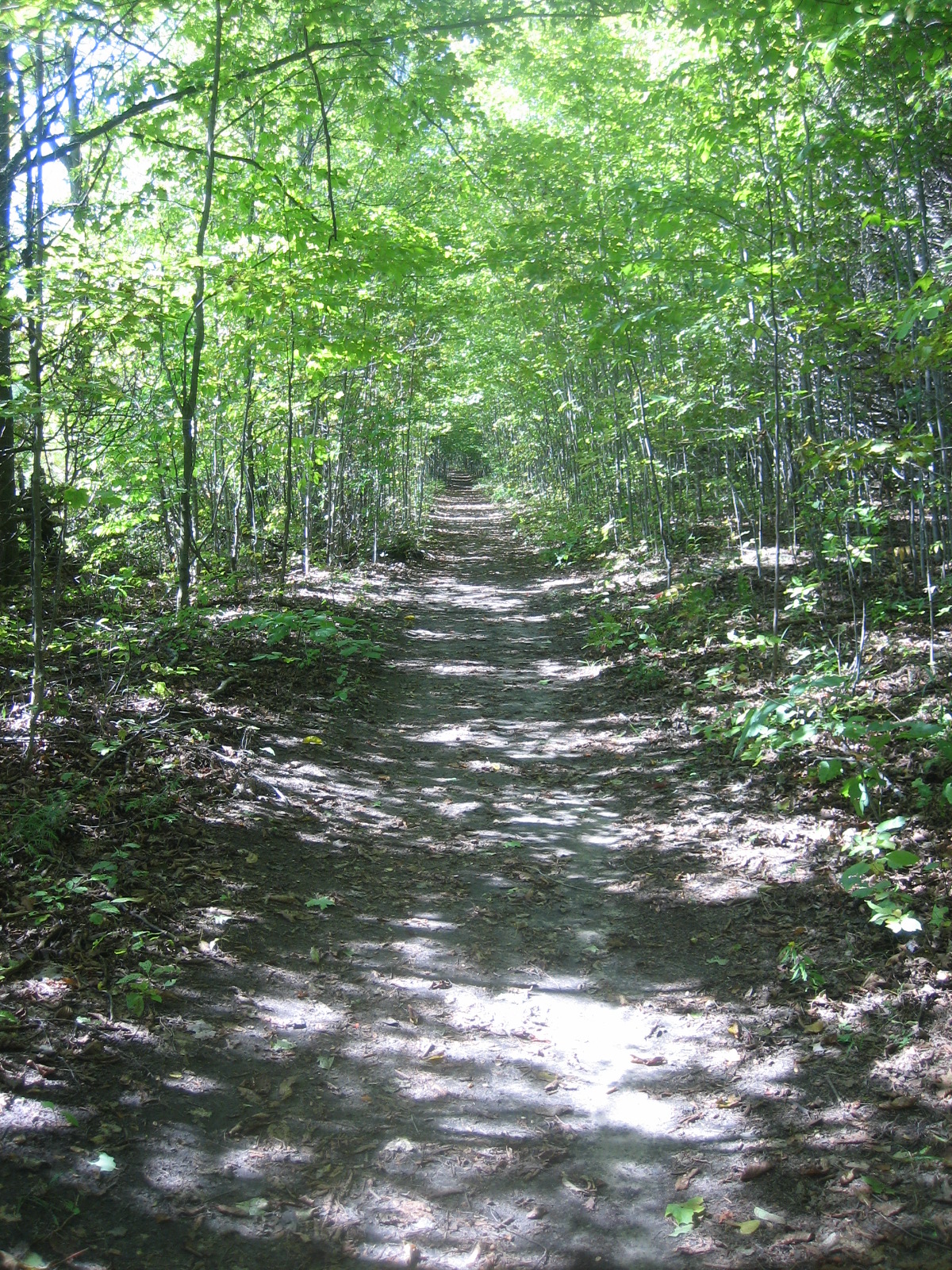
Two weeks ago I hiked the Hockley Valley Nature Reserve and found peace among the trees. This weekend I explored the Nottawasaga Bluffs, part of the Bruce Trail near the Blue Mountains. Although I mainly enjoy posting my hiking photos on the blog because I endorse spending time in nature as a way to stay physically and mentally healthy, I also wanted to share these images to be able to highlight the value of keeping our natural wonders intact. See the third picture? It shows the entrance to crevices that were formed thousands of years ago when water would pool in cracks in the rock and then expand when freezing over the winter. The pressure that the ice exerted on the rock forced the cracks to widen into fissures, then crevices, as you can see in photos 4 and 5. One of the deepest caves goes down ten metres and has four levels, the lowest of which is cold enough that it is covered in ice throughout the year. Being able to explore geological history like this is priceless. I wish we could make a greater effort at protecting our conservation areas, and increasing their size and number!
Showing posts with label conservation. Show all posts
Monday, October 10, 2011
Saturday, September 24, 2011
Come Hike with Me
To make sure I relax away from the computer, I don't usually post on weekends. However, today I went on a lovely day hike, which despite the physical strain is one of the most relaxing activities I enjoy engaging in! Now that bug season is over, the leaves are starting to turn, and the temperature is at that optimal level (not too hot in open fields, not too chilly in shaded forests), I long to go hiking pretty much every day. This time I chose a 4.5 km loop hike in the Hockley Valley Nature Reserve. The scenic views, fresh forest air, and random encounters with cows on adjacent properties (see below) made me very happy, and I was really glad to reconnect with nature and feel grateful for the protected wild areas we still have. If only we could conserve more of it. Enjoy the photos!
Thursday, June 2, 2011
To zoo or not to zoo, that is the question.
I celebrated my birthday this past weekend. Seeing as I was turning 5, I decided to go to the zoo.
Seeing the big cats at the zoo is a guilty pleasure of mine. Why not just a pleasure, without the guilt? Because most of the cats at the zoo (tigers, lions, cheetahs, leopards, cougars, and jaguars) aren't native to southern Ontario, and part of me believes they don't belong here, not even in the trusted hands of expert zookeepers. There's the standard philosophical issue around whether it's fair to keep animals on display in enclosures, even if they were found injured and wouldn't have survived in the wild, or if they're part of breeding programs to bring back the species from near extinction - but I don't really want to get into that here. My concern stems from the resources required to keep animals in confinement, and whether our reasons for doing so are strong enough to justify the financial and environmental expense.
From feed to medication to staff, large (especially carnivorous) animals require lots of resources. For any of you who own medium to large sized dogs, this concept is likely familiar to you. How much chicken, pork, and beef does a typical zoo use on a daily basis to keep its animals well fed? How many vets and drugs does it take to keep them healthy? How are all of the droppings disposed of?
Most of the animals at the zoo can't handle this climate. Subsequently, they spend the late fall, all winter, and early spring indoors. My mind immediately races through the additional costs associated with that kind of a setup: building construction (materials, energy), heating (energy), lighting (energy), and cleaning (materials, probably toxic ones). I can't help but think about the world's impoverished living in slums, shantytowns, favelas, and tent cities - imagine what all of these resources could do for them!
There are other issues, such as the gas-powered zoomobile, which runs seven to ten hours a day, 364 days a year. Most visitors come by car because the public transit route is extremely long. The picnic tables are underused these days with so many families buying food on site in disposal containers. Don't get me started on the worthlessness of the gift shop!
Enough whining. What's the alternative? After all, zoos serve three important purposes: educating the public, conserving endangered species, and promoting better stewardship of our natural environment. My suggestion is to stick to those goals, but go local. In Montreal, there's a wonderful place called the Ecomuseum Zoo. The animals featured in this zoo are all indigenous to Quebec's St. Lawrence Valley, and the website says...
I'd like to see more of these types of zoos, even if it means no more tigers for me! I'm happy to settle for an Ontario bobcat or lynx, and of course the two little cats indigenous to my living room.
Seeing the big cats at the zoo is a guilty pleasure of mine. Why not just a pleasure, without the guilt? Because most of the cats at the zoo (tigers, lions, cheetahs, leopards, cougars, and jaguars) aren't native to southern Ontario, and part of me believes they don't belong here, not even in the trusted hands of expert zookeepers. There's the standard philosophical issue around whether it's fair to keep animals on display in enclosures, even if they were found injured and wouldn't have survived in the wild, or if they're part of breeding programs to bring back the species from near extinction - but I don't really want to get into that here. My concern stems from the resources required to keep animals in confinement, and whether our reasons for doing so are strong enough to justify the financial and environmental expense.
From feed to medication to staff, large (especially carnivorous) animals require lots of resources. For any of you who own medium to large sized dogs, this concept is likely familiar to you. How much chicken, pork, and beef does a typical zoo use on a daily basis to keep its animals well fed? How many vets and drugs does it take to keep them healthy? How are all of the droppings disposed of?
Most of the animals at the zoo can't handle this climate. Subsequently, they spend the late fall, all winter, and early spring indoors. My mind immediately races through the additional costs associated with that kind of a setup: building construction (materials, energy), heating (energy), lighting (energy), and cleaning (materials, probably toxic ones). I can't help but think about the world's impoverished living in slums, shantytowns, favelas, and tent cities - imagine what all of these resources could do for them!
There are other issues, such as the gas-powered zoomobile, which runs seven to ten hours a day, 364 days a year. Most visitors come by car because the public transit route is extremely long. The picnic tables are underused these days with so many families buying food on site in disposal containers. Don't get me started on the worthlessness of the gift shop!
Enough whining. What's the alternative? After all, zoos serve three important purposes: educating the public, conserving endangered species, and promoting better stewardship of our natural environment. My suggestion is to stick to those goals, but go local. In Montreal, there's a wonderful place called the Ecomuseum Zoo. The animals featured in this zoo are all indigenous to Quebec's St. Lawrence Valley, and the website says...
The animals that reside at the Ecomuseum zoo are all animals that could not survive in their natural environment. Most of our animals are here because they have injuries that would prevent them from surviving in the wild (i.e. They are unable to escape a predator or to eat on their own). All our animals come from accredited rehabilitation centers and zoological institutions. The Ecomuseum zoo is also a refuge for orphaned wildlife and other wild animals born in captivity. In these cases the animals have not acquired the knowledge or learned the behaviours necessary for their survival in the wild, so we offer them protection against predators, food, care and lots of love!
I'd like to see more of these types of zoos, even if it means no more tigers for me! I'm happy to settle for an Ontario bobcat or lynx, and of course the two little cats indigenous to my living room.
Subscribe to:
Posts (Atom)