Showing posts with label climate change. Show all posts

Monday, December 12, 2011

Excuse Me While I Bang My Head Against the Wall

Sigh.

SIGH.

On days like today, I'm not even sure if "WTF!?" truly captures my reaction to the news. I need a new expression to reflect my complex emotional state after hearing that Canada has officially pulled out of the Kyoto Protocol. NDP Environment critic Megan Leslie put it best when she said, "it's like we're the kid who's failing the class, so we have to drop it before that happens", which as we know from our school days makes everything better.


I don't actually want to rant about this, since I don't want to make myself more miserable than I already am, so instead I'd like to draw your attention to the problem of air pollution in Beijing. Why? Because it gives us present-day proof of how screwed we are if we don't do something about the state of the environment. Last week, the smog in China's capital city was so bad that highways were closed and flights were cancelled because visibility was limited to a few hundred metres. The U.S. Embassy's smog index actually exceeded its upper limit. What's worse than a "hazardous" reading? Critical? Life-threatening? Deadly?

It saddens me that so many people have gotten caught up in debating the merits of measuring one particle vs. another (the Americans like the PM 2.5 standard, the Chinese like PM 10), not because it doesn't matter (it does), but because it detracts from the real problem: the air in northeastern China is a chronic and very dangerous issue. It's possible that breathing in that bad air will reduce life expectancy by five years. What are we going to do about it?


We can start by thinking about the main contributors to air pollution in the Beijing area: vehicles, coal-fired power plants, and industry. While China is on the other side of the planet, I actually feel quite capable of helping to bring about change in these areas by remembering the link between my actions and their consequences:

  • cars: I admit to owning one. However, it's very fuel-efficient, and I only drive it once or twice a week. If I had to give it up, I'd probably adjust pretty quickly, never look back, and roll around in all the money I'd be saving. The best part? I would be an excellent role model, showing how great my quality of life can be without having to own a car.

  • coal: I am a huge supporter of clean and renewable energy and its ability to reduce our dependency on fossil fuels, thereby mitigating climate change. The more we invest in mixing alternatives into the conventional electricity grid, the sooner we'll develop more efficient green power generation technologies, which will hopefully lead to the whole world turning to renewables.

  • stuff: I avoid buying useless crap, especially useless crap made in China. As for those items that are practical and necessary, I try to find the ones that are made domestically, and made without plastic (since so much of it comes from China). Our consumer culture is partially responsible for the dirty clouds billowing out of Chinese factories, and I want no part of it.

My lifestyle impacts my home and work; my city, region, province, and country; and in many ways, the whole planet. The Conservative government believes it is justified in shirking responsibility; I could not disagree more and refuse to allow this country's rapidly declining international reputation to smear my own.


Photo of F grade used under Creative Commons from amboo who? (flickr).
Photo of Beijing traffic used under Creative Commons from poeloq (flickr).

Friday, October 28, 2011

In the News Today

Hold on to your hats, folks, I've got a great WTF!? post for you today. This week Coca-Cola announced a redesign of their cans to advertise their newest environmental campaign: $2 million will be donated to a project that seeks to protect polar bear habitat in arctic regions. So it comes as no surprise that the new cans will feature the iconic bear on a white background:


It saddens me that Coca-Cola has partnered with the World Wildlife Fund on this project; poor WWF must be pretty cash-strapped to choose to team up with a soft drink company for money. But that's not what's shocking about this story. Rather, it's the motivation behind the campaign, and how incongruous it is with Coke's modus operandi. Let me explain.

The polar bear is the focus of this project in part because the animal has been featured in Coke ads since 1922 and also because its population has been declining due primarily to warming arctic waters, i.e. climate change. Briefly, rising temperatures in the north cause sea ice to melt earlier in the summer. Without this ice, polar bears have a really hard time hunting seals, and they end up on dry land with less food and not enough fat to see them through the season. Many lose even more energy just trying to make it to the coast, now that there are greater distances to swim between ice floes. Tragically, pregnant female bears can't always build effective dens in thawing permafrost. There are many more threats to polar bears' survival that are related to climate change, and you can read about them here.

Red areas show the projected loss of optimal polar bear habitat over the next 40 years.

I have no issue at all with the efforts being made to protect these majestic bears. My beef is with Coca-Cola. How can they expect us to see this as anything besides greenwashing? They want to save the bears that are harmed by climate change... while contributing to climate change by making soft drinks... WTF!? I may not be a climate scientist, but if the company is responsible for over 1.6 billion servings of its various beverages every day, then I'm willing to bet that the carbon footprint of this worldwide production is not exactly negligible.

The syrup/concentrate alone accounts for much of this, since Coke is made with high fructose corn syrup. HFCS is really complicated to produce, starting with the monoculture farming of a variety of corn that is rich in starch and utterly devoid of nutrients. Vast amounts of synthetic fertilizers and pesticides (which, in and of themselves, require plenty of energy to produce) are applied to the corn, which must subsequently be milled into corn starch, processed into corn syrup, mixed with enzymes, purified, enriched, and evaporated to yield HFCS. Imagine just how much energy is required to make this happen... and how many greenhouse gases are emitted by the coal-fired power plants that feed the processing plants! All in the name of profit...


There are other issues related to the production of soft drinks, not the least of which is the depletion of groundwater in the areas surrounding Coca-Cola's bottling plants, notably in India. I don't need to tell you that messing with the water cycle has a serious impact on global climate. Another big factor is packaging: the production of single-use plastic bottles and aluminum cans only adds to the already enormous carbon footprint associated with making Coke. I don't need to go on. It's clear that making this beverage is as bad for the planet as consuming it is hazardous for human health. Spending $2 million on protecting polar bear habitat just doesn't make up for the damage that has already been done. Where is the accountability?


Photo of new Coca Cola can used under Creative Commons from José Roitberg (flickr).
Image of changes in polar bear habitat sourced from Wikimedia Commons.
Image of Coca Cola's impact in India sourced from Wikimedia Commons.

Tuesday, January 18, 2011

In the News Today

I'm in a foodie mood today, so I've collected some news articles about tuna, tea, and bumblebees - they pollinate tomatoes, dontcha know!

The BP oil spill continues to wreak havoc on the environment, this time as a result of the cleanup efforts: aquatic toxicologists are worried that the dispersants used to break up the oil actually increase the chances that sea life will interact with oil because the droplets are now dispersed over a much larger area than the spill originally affected. This spells trouble for the bluefin tuna that spawn in the Gulf of Mexico: "petroleum contamination could cause embryos to develop deformities, which can make it impossible for the young fish to grow old enough to reproduce". Read the full article here.

Unfortunately, bluefin tuna have other things to worry about: the growing popularity of this fish around the world (but mostly in Japan) is rapidly making it an endangered species. How do sushi-lovers respond to this crisis? By demanding more. In early January, a giant bluefin tuna sold at a record-breaking price at Tsukiji market in Tokyo (see here for details), which I imagine only serves to encourage the fishing industry to continue depleting the stocks. I wonder if fishers have any transferable skills for the inevitable career transition that awaits them when the seas are emptied of life?

Weaker flavour and reduced yields of tea in the Assam tea growing region of India provide an interesting example of the fallout that rising temperatures due to global climate change can have on agriculture. Damp conditions resulting from warmer weather have lowered production levels, bolstered the populations of insects that damage the tea bush, and apparently even diluted the usually strong and distinct flavour of Assam tea. While I anticipated that climate change would mess up agriculture (when you change the growing conditions, you change the yield), I'm surprised that the flavour of the tea has changed. If you read similar reports by green tea growers in East Asia, please let me know! Tea is my go-to hot beverage, and green tea is my favourite type.


As if the disappearance of honeybees wasn't enough, according to a recent study, four species of bumblebees in the US that are vital for the pollination of native plants (and tomatoes!) have declined by 96% due to pathogens and habitat loss. I'll just give you a minute to let that figure sink in. 96%! If these bees disappear, then the species of plants they are perfectly designed to pollinate will die out with them. But the chain of events doesn't stop there: what happens to the animals whose diet consists of these plants? What happens to the nutrient and water cycles when species A, B, and C are replaced by species X, Y, Z that behave totally differently from what our local ecosystems are used to? In nature, you can't just change one thing at a time, and even small problems can have far-reaching consequences. Read the full article here.

If you have any other news related to the impact our degraded environment has had on food and beverages, please share it in the comments section below!

Photo of tuna market used under Creative Commons from whatsound (flickr). 
Photo of tea plantation used under Creative Commons from Loke Seng Hon (Wikimedia Commons).
Photo of bumblebee used under Creative Commons from José M. Rus (flickr).

Sunday, November 21, 2010

Senate Simultaneously Kills Climate Act and Breaks My Heart

A few years ago, Jack Layton introduced Bill C-311, otherwise known as the Climate Change Accountability Act: reducing national greenhouse gas emissions by 80% from 1990 levels by the year 2050 and establishing plans to meet that target. After the country voted in a new government two years ago, the bill was re-introduced by the MP for Thunder Bay, debated and passed in the House of Commons, and sent to the Senate for the last stage in the process of becoming Canadian law. While emissions targets are great in theory but often disappointing in practice because the government is a perpetual climate change reduction under-achiever, passing this bill would have been a step in the right direction. At the very least, it would show the world that Canada is trying to be responsible and recognize its impact on global climate change.


Instead, the Senate took everyone by surprise and voted on Bill C-311 this week on a day when the Conservatives outnumbered their colleagues because 15 Liberals were not present. They didn't pause for debate, they just defeated the bill. That's right, people we did not elect killed policy that people we actually voted for agreed to, i.e., this was an undemocratic act. Apparently Prime Minister Harper agrees with the defeat of the bill (many believe he encouraged his Senator friends to make this happen) because it would be "irresponsible" to put people out of work. In other words, Harper doesn't want to upset his best friend, Big Industry. The irony of how irresponsible it is to kill a bill that could help keep us alive in the long term seems to be lost on him.


 The range of emotions I have felt since hearing this news has included anger, sadness, disgust, outrage, shock, and as I mentioned in the title, heartache. Worst of all, I feel ashamed to be Canadian if this is what the government can get away with.

For more details, please read this article from the Globe and Mail and this blog post from the David Suzuki Foundation.

Tuesday, November 2, 2010

Winterize Your Home


The Merriam-Webster dictionary claims that the word "winterize" (verb: to make ready for winter or winter use and especially resistant or proof against winter weather) was first used in 1934. I bet it was a Canadian who said it! Today's winter temperatures may not be as low or last as long as they once did (thanks to our good friend, climate change), but since it's now consistently at or below zero overnight where I live, I've started thinking about about how best to keep my home warm without breaking the bank or the planet.

Snow in Montreal last December. It's coming back!
Luckily, you don't have to make any big purchases or embark on complicated renovation adventures to enjoy big energy savings this year. Unless you're just itching to do so, in which case I'd ask you to please contact me and I'll happily do the research to support your project! For the rest of us, consider these tips:

Turn your thermostat down! This is really simple and very effective, even if you're not willing to make a big change. To make things even easier, invest in a programmable thermostat and punch in the warmest temperature for your mornings, evenings, and weekends, program slightly cooler air for the hours you spend under a warm duvet, and save the uncomfortably cool setting for longer stays away from home.

Bulk up on insulation! As you probably remember from science class, hot air rises, so the first place you need to pad with the pink stuff (does it come in other colours these days?) is your attic. Other insulation-deprived areas are unfinished basement walls and crawlspaces.

Give your furnace some TLC! The filters on your furnace should be cleaned every few months to ensure optimal efficiency, and eventually they need to be replaced, too. If you want to go all out, call in an expert and have your furnace professionally serviced.

Share your blankets! Air ducts like to be cozy, too, so make sure all of the ones carrying hot air are insulated in areas where they pass through spaces you keep unheated in your home. You can do the same to your hot water heater. Don't forget the teddy bear and bedtime story...

Learn how to use a caulking gun! Sorry, I'm running out of fun titles. Applying weather-stripping or caulking to windows and doorways is another really inexpensive yet highly effective method of keeping cold air out of your home. Even if three out of the four sides of a window are well-sealed, you could be losing a lot of heat to the fourth.

Knit a snake! I'm not sure what these are supposed to be called, door runners maybe? Draft stoppers? Even without crafty skills you can avoid drafts under doorways with a towel, or, in a pinch, a couple of sweaters! There are also many sewing/knitting/crocheting guides online, if you're so inclined.

Dress your windows! In the world of shutters and drapes, there are more and less insulating ones. Look for blinds that trap air and curtains made of heavy fabrics. Remember to close all window coverings once it's dark out.

Wear an ugly sweater! You're at home, who's going to see you? Put on an extra layer of clothing rather than turning on an electric space heater. Heat yourself, not the room! Warm blankets and throws are not only cozy on the couch, they add style - not that you, the energy-saving superhero, need any.

Let it snow! This isn't a tip, and snow can lose its romanticism after the holidays are over, but why not keep your fingers crossed for a sustained cover of snow on your roof? Take advantage of Mother Nature's environmentally-friendly, local, sustainable, organic insulation.

--------------------

Compiled from tips on the Live Green Toronto and Toronto Hydro websites, as well as a few of my own brain cells. You may also want to check out this interactive guide from CBC.

Thursday, October 7, 2010

What Will You Be Doing on 10/10/10 Besides Eating Turkey?

I suspect you have very few other plans, but this post will hopefully change that. Sunday is the date for this year's Global Work Party, which is basically about getting together with neighbours to take action against climate change. The goal is let the government know that everyday people can and do make a difference, and that they've fallen behind on their responsibilities: to change policies, to draft new legislation, to sign treaties.


Thousands of groups in over 150 countries have already planned events for October 10th. You can search for one near you here. Or, if you have an even better idea for a project, sign up to host your own party here.


Here are the ten favourite ideas as posted on the 350.org site:
  1. plant trees
  2. install solar panels or a solar hot water heater
  3. work on a community garden or organic farm
  4. ride your bike to raise awareness, or host a bike repair workshop
  5. set up a small-scale wind farm
  6. increase energy efficiency by installing LED or CFL lights, weatherizing your home, or scheduling an energy audit
  7. start a Transition Town in which there is increased awareness of sustainable living and a community-led response to the pressures of climate change and fossil fuel depletion
  8. work together with the members of your religious community to brainstorm ideas
  9. pick up litter, dispose of it appropriately (compost, recycling, and landfill), and beautify your neighbourhood
  10. join the 10:10 Global campaign to help cut carbon by 10% per year starting in 2010
So go out on Sunday! Meet your neighbours, feel proud about your community, get some exercise and fresh air, work on an exciting project, and send a strong message to the government. Then go home and eat local, sustainably raised turkey.

Monday, September 20, 2010

In the News Today

[Every day I read news about the state of the environment and the things we humans do to help it or harm it. I'll try to share some of the stories with you on this blog.]

 Two Australian researchers (a psychologist and a climate scientist) have published a paper about why so many of us are unconvinced that climate change is happening. Apparently there are a lot of psychological traps we fall into when trying to understand what we're being told about climate change by the media, politicians, and each other. For example, do you know how much carbon dioxide is in the atmosphere? Does 0.0384% by volume, or 390 parts per million, mean anything to you? Sound kind of tiny? Well, if we took all of the CO2 and collapsed it into a single layer, it would be eight metres thick. All of a sudden it's not insignificant.


 Another way to help us understand climate change facts would be to learn about it in undergrad: the National Tertiary Education Union (an Australian union for workers in academia and related industries) is proposing that university students be required to become environmentally literate by taking courses on basic climate science and how their chosen field of study contributes to climate change. While the union can't directly affect university curricula, it can demand these changes be made as a condition of future labour contracts. Will Australia pave the way for us to adopt similar measures in North America?

Wednesday, September 15, 2010

Watching the World Clock Makes Me Sad

Today I discovered Peter Russell's World Clock. If you watch it for about half an hour, you'll see the number of extinct species go up by one. I was too distracted by all of the other numbers (count-ups?) to notice this happening, however.

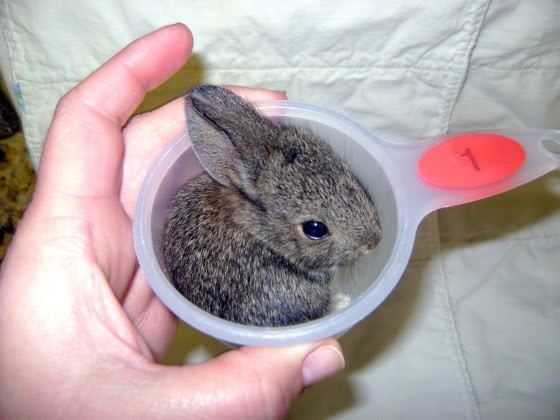
Folks, this is going to be a depressing post to read. I'll try to keep it short. Please enjoy this cute picture to bolster your spirits, then grab a box of tissues, and we'll hold each other as we examine this sadness together. Don't worry, I'll place another cute picture right at the end.

Bunny in a cup! Courtesy of http://cuteoverload.com

On the clock, the first statistic we face is the rapid growth of the population. Those numbers are going up so fast that if I count along with them out loud, I have to skip a few just to take a breath. It isn't pleasant, of course, to look at how often someone dies, but if you watch the "Death" counter you'll notice it's going quite a bit slower than the three other counters in that part of the clock. There are a lot of us on this little planet, and every day more of us are moving up in socio-economic status, leaving behind larger and larger footprints.

Next we're assaulted with that bleak statistic about species going extinct, as I mentioned above. One every half hour means 48 every day. Meanwhile, there are 1.5 billion cows on the planet (thankfully, there is no counter for bovine population growth on the clock). There's something wrong with this picture, right? Unsurprisingly, forests are being cut much faster than they're being replanted. Actually, reforestation is happening so slowly that it's even being outpaced by desertification. In other words, a double whammy of death. While clearcutting forests with modern machinery is pretty fast-paced work, desertification happens very slowly, doesn't make for good TV, and occurs in parts of the world the Western hemisphere prefers to ignore, so this doesn't make headlines too often.

Ah, the war budget, my favourite part of the clock! If only Peter Russell had also added a counter for how much money is being made from war, then we'd really be set. In less than one year, 850 billion dollars have been spent on the military, globally. Meanwhile, half of the world lives in poverty. What?!

Let's move on. I was prepared to feel sad, not angry.

Barrels of oil and tons of green house gases are being pumped and emitted, respectively, at approximately the same rate. I know it's not scientific of me to say this, but I can't help myself: "coincidence? I think not!" I know there are a lot of decimal points in the digital thermometer on the clock, but that's a good thing. Chances are you live close enough to sea level that a rate of climate change any faster than this would see you running for higher ground a lot sooner than you thought.

Some good news: bicycles are being made faster than cars (and computers). I'll be writing about the BIXI bike-sharing program in a future post, just you wait! The "Internet users" statistic is interesting because only recently has there been any media coverage about the amount of energy used to run a search, and these days it's so fashionable to look things up on the internet. I don't question the utility of finding an answer quickly, and I certainly wouldn't be able to update this blog with much frequency were it not for internet searches, but I wonder why we spend so much time on the internet doing brain-numbing things. What are celebrities wearing to TIFF screenings? I don't care!

For your sake and mine, I'm going to skip the abortions counter. I will also not delve deeply into the "Death Causes" column on the clock, because I promised a short post and have clearly already gone back on my word. Heart disease remains a bigger killer than cancer. Both are mostly preventable. Most of the deaths attributed to infectious disease are taking place in undeveloped nations - we can cure TB and leprosy, it's just not happening when there are no resources.

Okay, that's enough. I'm glad you stuck with me. As uncomfortable as it is to face the truth, we really have to at this point. Remember the World Scientists' Warning to Humanity? 18 years have gone by. Are we doing enough?

As promised, here is another cute picture to cheer us all up:

Piglet in pink rain boots! Courtesy of http://cuteoverload.com