Monday, January 31, 2011
Delurking Day
Apparently this past January 14th was Delurking Day, and although I'm only getting around to it now (at least it's still January), I'd still like to openly invite my readers to say hi or leave a comment below. As a recovering blog lurker myself, I now see the value in coming out of the virtual woodwork and tipping my metaphorical hat to the great blog writers out there... you know, with words, rather than silently in my head! As a result, I've become much more active in regularly commenting on other sites. If you have a blog of your own, leaving a comment is a great way to bring in more traffic. On the flip side, it's also really helpful for blog writers to find out who their audience is, and I think I speak for most of us when I say we really appreciate our readers and would love a chance to say thank you!
Don't be shy, and please don't let a lack of something witty to remark on prevent you from leaving a comment! I get excited every time I get one, and I appreciate the extra time you take to write a few words after reading what I have to say. After all, a good discussion is one of the best ways to share ideas!
Thanks to The Mindful Merchant for encouraging me to try this out (and for letting me copy over the badge). It should go without saying... check out her blog!
Thursday, January 27, 2011
Foodie Politics
It's late, so I'll be really quick about this: tonight I was one of about 50 people to attend The Local Politics of Food panel discussion, and the energy in the room was palpable. Among many other interesting points, Avia Eek stressed the importance of asking political candidates to be clear about their platforms as they relate to the food system; Joe Mihevc urged us to reconsider the dichotomy between viewing urban centres only as places for business, commerce, education, and finance, and rural areas as space used exclusively for farming; and Faisal Moola supported treating farms as ecosystems because they provide an incredible number of ecological benefits that we take for granted. Moderator Sarah Thomson asked how we can take action, and the responses varied from starting community gardens to supporting the establishment of foodbelts (agricultural greenbelts) to changing people's mindsets about the aesthetics of produce so that no food is wasted simply because it isn't perfectly unblemished on supermarket shelves. Finally, I really liked how Jacob Kearey Moreland closed the discussion by highlighting that what sustains us are the connections we have with each other and the planet. Now that more people are realizing this, things are beginning to change.
A big thank you to Darcy at Food Forward and Jacob with Dig In! Campus Agriculture for organizing this event.
Wednesday, January 26, 2011
GMOs: Now In Chicken and Banana Flavours!
We can add genetically modified chickens and bananas to the growing list of franken-foods in the news recently. (I've previously commented on GM pigs, salmon, and apples.)
Scientists in the UK have engineered the world's first GM chickens that do not spread the avian flu, proving once again that simple problems can be fixed with extremely complex, costly, synthetic solutions. As we all know, avian flu is very easily spread in factory farm conditions where the animals live in such close quarters that the transmission of diseases is essentially inevitable. By the way, this is why 1 in 4 North American chickens carries salmonella. Obviously, instead of adopting more sustainable farming practices, industrial chicken factories (they're not farms) prefer to churn out as many chickens in as little time with as small of a budget on as small of a piece of land as possible. Enter the GM variety that is born immune to the avian flu, and watch as the profits rise.
But wait, it gets better: bananas are the next food to be targeted because the one and only variety exported to Canada, the US, and Europe (the Cavendish, which happens to be sterile) is currently being threatened by a fungus. To avoid losing the entire crop, it has been suggested that we genetically modify the Cavendish banana to be resistant to this fungus. Apparently the people who live in the areas where banana trees are a native plant (hot climates in Asia, Africa, and Latin America) grow a mix of about 1000 varieties in their own backyards, since diversity prevents a single disease from wiping out every last tree. But the people behind the industrial banana farming giants that export the fruit to the countries you and I live in (Dole, Chiquita, and Del Monte own 85% of the US market) want nothing to do with those varieties. They claim that those other bananas won't look so good after long-distance travel. I suspect the real reason they won't switch is that no other variety produces a giant yield like the Cavendish does. And let's face it - growing a monoculture of anything is just asking for trouble. All it takes is one pest to come along and destroy the entire crop. In other words, making one type of banana resistant to one fungus hides the symptom of a bigger problem: industrial agriculture is unsustainable.
These two stories offer more proof that genetic modification has nothing to do with feeding the hungry and everything to do with increasing the profit margin of big agribusiness while simultaneously allowing them to maintain farming practices that are detrimental to livestock, workers, the environment, and our health. But I don't want to end this post on such a pessimistic note. We need to remember that the public is growing increasingly aware of and concerned about genetic modification, that information about this topic is becoming more widely available, and that it is becoming easier to source organically grown food that is GMO-free!
How do you feel about genetic modification?
Photo credits: chickens; bananas.
Scientists in the UK have engineered the world's first GM chickens that do not spread the avian flu, proving once again that simple problems can be fixed with extremely complex, costly, synthetic solutions. As we all know, avian flu is very easily spread in factory farm conditions where the animals live in such close quarters that the transmission of diseases is essentially inevitable. By the way, this is why 1 in 4 North American chickens carries salmonella. Obviously, instead of adopting more sustainable farming practices, industrial chicken factories (they're not farms) prefer to churn out as many chickens in as little time with as small of a budget on as small of a piece of land as possible. Enter the GM variety that is born immune to the avian flu, and watch as the profits rise.
But wait, it gets better: bananas are the next food to be targeted because the one and only variety exported to Canada, the US, and Europe (the Cavendish, which happens to be sterile) is currently being threatened by a fungus. To avoid losing the entire crop, it has been suggested that we genetically modify the Cavendish banana to be resistant to this fungus. Apparently the people who live in the areas where banana trees are a native plant (hot climates in Asia, Africa, and Latin America) grow a mix of about 1000 varieties in their own backyards, since diversity prevents a single disease from wiping out every last tree. But the people behind the industrial banana farming giants that export the fruit to the countries you and I live in (Dole, Chiquita, and Del Monte own 85% of the US market) want nothing to do with those varieties. They claim that those other bananas won't look so good after long-distance travel. I suspect the real reason they won't switch is that no other variety produces a giant yield like the Cavendish does. And let's face it - growing a monoculture of anything is just asking for trouble. All it takes is one pest to come along and destroy the entire crop. In other words, making one type of banana resistant to one fungus hides the symptom of a bigger problem: industrial agriculture is unsustainable.
These two stories offer more proof that genetic modification has nothing to do with feeding the hungry and everything to do with increasing the profit margin of big agribusiness while simultaneously allowing them to maintain farming practices that are detrimental to livestock, workers, the environment, and our health. But I don't want to end this post on such a pessimistic note. We need to remember that the public is growing increasingly aware of and concerned about genetic modification, that information about this topic is becoming more widely available, and that it is becoming easier to source organically grown food that is GMO-free!
How do you feel about genetic modification?
Photo credits: chickens; bananas.
Tuesday, January 25, 2011
Happiness Is...
... stepping into the William Doo Auditorium and seeing people already sitting on the stage floor and in the aisles because there are absolutely no seats left for the screening of The Economics of Happiness.
I'm no good at reviewing films, so I'll just say this: despite experiencing a fair amount of pain from having to sit on the hard steps of the auditorium without a chance to stretch my legs for close to two hours, I felt hopeful and inspired after watching Helena Norberg-Hodge's work, and that's good enough for me. The message was clear and powerful: globalization erodes happiness, creates insecurities to fuel consumerism, ravages natural resources with no regard for future generations, speeds up global climate change, ruins livelihoods, breeds conflict where there was none before, requires government subsidies to big business that the public pays for, and is based on an index of economic growth that doesn't take into account the actual well-being and life satisfaction of people like you and me.
The panel discussion was equally enlightening, with producer Helena Norberg-Hodge stating that the first step to making change should be built around education (information is powerful), urban farmer Eric Rosenkrantz suggesting we place demand ahead of supply (as with community shared agriculture) to avoid creating debt, and activist chef Joshna Maharaj highlighting how community food kitchens not only increase access to healthy food, but also reduce social isolation.
If you're interested in seeing the film, there are a variety of launch events happening around the world until the end of February, plus other screenings in Canada and the US. The film's website also provides instructions on how to organize a screening in your own community.
Also, if you couldn't attend the screening last night at the University of Toronto and are curious about the Sheridan College students' very well done infographics and short videos that explore the current food crisis, check out Sustain Ontario's Good Food Ideas for Kids website.
[My apologies for the poor resolution in the images above.]
I'm no good at reviewing films, so I'll just say this: despite experiencing a fair amount of pain from having to sit on the hard steps of the auditorium without a chance to stretch my legs for close to two hours, I felt hopeful and inspired after watching Helena Norberg-Hodge's work, and that's good enough for me. The message was clear and powerful: globalization erodes happiness, creates insecurities to fuel consumerism, ravages natural resources with no regard for future generations, speeds up global climate change, ruins livelihoods, breeds conflict where there was none before, requires government subsidies to big business that the public pays for, and is based on an index of economic growth that doesn't take into account the actual well-being and life satisfaction of people like you and me.
![]() |
| fltr: Helena, Joshna, Eric, and Wayne |
The panel discussion was equally enlightening, with producer Helena Norberg-Hodge stating that the first step to making change should be built around education (information is powerful), urban farmer Eric Rosenkrantz suggesting we place demand ahead of supply (as with community shared agriculture) to avoid creating debt, and activist chef Joshna Maharaj highlighting how community food kitchens not only increase access to healthy food, but also reduce social isolation.
If you're interested in seeing the film, there are a variety of launch events happening around the world until the end of February, plus other screenings in Canada and the US. The film's website also provides instructions on how to organize a screening in your own community.
Also, if you couldn't attend the screening last night at the University of Toronto and are curious about the Sheridan College students' very well done infographics and short videos that explore the current food crisis, check out Sustain Ontario's Good Food Ideas for Kids website.
[My apologies for the poor resolution in the images above.]
Friday, January 21, 2011
Organic Tobacco... What Will They Think Of Next?
Tonight I'm expecting three dinner guests, so I'm going to take a really quick break from cleaning and cooking to get something off my mind: organic tobacco doesn't make sense.
Apparently a growing (ha! pun!) number of American farmers are beginning to cultivate organic tobacco, since the increased costs and slightly lower yield are offset by a much higher selling price once harvest time comes around. The cigarettes made out of this tobacco are then marketed as being "natural" due to their lighter environmental footprint as compared to the conventional ones.
But... who buys these? There are people who worry about environmental degradation, and they might approve of the fact that no synthetic fertilizers or pesticides were used, protecting the soil and nearby streams, but what about the amount of waste generated by the production, consumption, and disposal of the cigarettes in question? Then there are people who worry about their health, and they may take comfort in the fact that they aren't being exposed to residual toxins from the nasty chemicals used to grow tobacco using conventional methods, but what does that matter if they're still inhaling tar, nicotine, carbon monoxide, benzene, formaldehyde, and hydrogen cyanide?
Folks, I'm stumped. Is this just another example of "make it, and they will buy it"? Do any of you smoke, and if so, would you pay more to buy "natural" cigarettes?
Apparently a growing (ha! pun!) number of American farmers are beginning to cultivate organic tobacco, since the increased costs and slightly lower yield are offset by a much higher selling price once harvest time comes around. The cigarettes made out of this tobacco are then marketed as being "natural" due to their lighter environmental footprint as compared to the conventional ones.
But... who buys these? There are people who worry about environmental degradation, and they might approve of the fact that no synthetic fertilizers or pesticides were used, protecting the soil and nearby streams, but what about the amount of waste generated by the production, consumption, and disposal of the cigarettes in question? Then there are people who worry about their health, and they may take comfort in the fact that they aren't being exposed to residual toxins from the nasty chemicals used to grow tobacco using conventional methods, but what does that matter if they're still inhaling tar, nicotine, carbon monoxide, benzene, formaldehyde, and hydrogen cyanide?
Folks, I'm stumped. Is this just another example of "make it, and they will buy it"? Do any of you smoke, and if so, would you pay more to buy "natural" cigarettes?
Thursday, January 20, 2011
Talking About Food... and Eating It, Too!
I used to think January was a dead month: many people take a few weeks to recover from the holidays (excessive eating and exposure to family members will do that), and for those of us living in more wintry climates, any interest in going outside is easily replaced by the desire to keep warm under a blanket with a mug of hot chocolate.
Then I met Food Forward, and my naive worldview went out the window... and immediately froze in mid-air and shattered on contact with the sidewalk. Later someone slipped on it and fell. You get the idea. If you only attend two events this month (okay three, because you should also come to the free screening of The Economics of Happiness), these are the ones for you:
The Local Politics of Food
This panel discussion will feature three exciting speakers: Toronto City Councillor and urban agriculture advocate Joe Mihevc, King Township Councillor and farmer Avia Eek, and David Suzuki Foundation Science Director and conservation expert Faisal Moola. If you attend, you will be in good company indeed! The discussion, moderated by Women's Post publisher and former mayoral candidate Sarah Thomson, will cover some of the issues and solutions that municipalities are working on in relation to the food system and how residents can take action and bring about community change.
Come out and ask these experts your burning food system questions on Wednesday, January 26th, between 7:00 and 8:30 pm in the South Dining Room at Hart House (7 Hart House Circle, University of Toronto). You can RSVP here.
Foodie Drinks

What happens when you invite a bunch of politically-minded foodies to a hip bar, introduce them to groups doing good work to support the good food movement, offer them Local Food Plus certified food, then let them mingle, socialize, and network? You get Foodie Drinks, where those who care about expanding access to healthy food and supporting farmers and animal welfare come together to make positive change in the community. This month's event will feature Arlene Hazzan Green and Marc Green, founders of The Backyard Urban Farm Company, and Laura Reinsborough, founder of Not Far From The Tree, who will speak about the good work they are doing to support the local food system.
Don't be shy, come out and make new friends who share your foodie values on Monday, January 31st, between 7:00 and 10:00 pm in the Melody Bar at the Gladstone Hotel (1214 Queen St W). You can RSVP here.
Both The Local Politics of Food and Foodie Drinks are open to everyone and free to attend, however a $10 donation is encouraged to cover the costs of organizing event like these and pushing good food policy forward at City Hall.
Photo credit.
Then I met Food Forward, and my naive worldview went out the window... and immediately froze in mid-air and shattered on contact with the sidewalk. Later someone slipped on it and fell. You get the idea. If you only attend two events this month (okay three, because you should also come to the free screening of The Economics of Happiness), these are the ones for you:
The Local Politics of Food
This panel discussion will feature three exciting speakers: Toronto City Councillor and urban agriculture advocate Joe Mihevc, King Township Councillor and farmer Avia Eek, and David Suzuki Foundation Science Director and conservation expert Faisal Moola. If you attend, you will be in good company indeed! The discussion, moderated by Women's Post publisher and former mayoral candidate Sarah Thomson, will cover some of the issues and solutions that municipalities are working on in relation to the food system and how residents can take action and bring about community change.
Come out and ask these experts your burning food system questions on Wednesday, January 26th, between 7:00 and 8:30 pm in the South Dining Room at Hart House (7 Hart House Circle, University of Toronto). You can RSVP here.
Foodie Drinks
What happens when you invite a bunch of politically-minded foodies to a hip bar, introduce them to groups doing good work to support the good food movement, offer them Local Food Plus certified food, then let them mingle, socialize, and network? You get Foodie Drinks, where those who care about expanding access to healthy food and supporting farmers and animal welfare come together to make positive change in the community. This month's event will feature Arlene Hazzan Green and Marc Green, founders of The Backyard Urban Farm Company, and Laura Reinsborough, founder of Not Far From The Tree, who will speak about the good work they are doing to support the local food system.
Don't be shy, come out and make new friends who share your foodie values on Monday, January 31st, between 7:00 and 10:00 pm in the Melody Bar at the Gladstone Hotel (1214 Queen St W). You can RSVP here.
Both The Local Politics of Food and Foodie Drinks are open to everyone and free to attend, however a $10 donation is encouraged to cover the costs of organizing event like these and pushing good food policy forward at City Hall.
Photo credit.
Wednesday, January 19, 2011
Levi's New Jeans Line Misses the Point
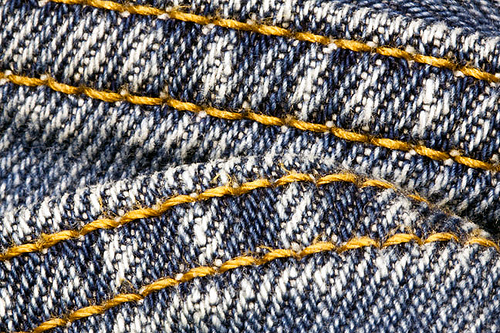
Apparently Levi's has developed a new line of jeans that uses 28% less water during its manufacturing. Specifically, the amount of washing needed to soften the denim has been reduced, and while I'm happy that 16 million litres of water will be saved, I'm left wondering just how much we should be congratulating the company.
I know, I know, I'm an idealist, and it gets in the way of my optimism such that every step in the right direction only serves to highlight everything else that isn't being done. It's hard for me to sit idly by while the general public applauds small efforts like this but remains ignorant of other issues that remain unaddressed. What can I say, calling this new line of jeans Water<Less reminds me of greenwashing. Growing cotton, producing denim, and manufacturing jeans is hugely water-intensive even if you don't bother to stone-wash the pants! Hiding this fact by tricking consumers into believing the jeans were made using waterless manufacturing techniques is... well, I guess it's the norm these days.
So what's all the fuss about?
See what I mean, about how slightly reducing the amount of water used to soften the jeans is only great if you remain ignorant of the rest of the steps involved from field to closet? Well, I'm still trying to be a more optimistic person, so I'll work on feeling grateful that Levi's has taken a step in the right direction. Meanwhile, I'll buy my next pair in a thrift shop, donate them or find an alternate use for them once I'm done with them, and keep you apprised of any other environmentally friendly solutions that Levi's and their competitors come up with!
How about you? What's your closet filled with? Have you discovered brands or local artisans that are trying to do good by the environment when they make clothing?
Photo credits: close-up of jeans; cotton field.
I know, I know, I'm an idealist, and it gets in the way of my optimism such that every step in the right direction only serves to highlight everything else that isn't being done. It's hard for me to sit idly by while the general public applauds small efforts like this but remains ignorant of other issues that remain unaddressed. What can I say, calling this new line of jeans Water<Less reminds me of greenwashing. Growing cotton, producing denim, and manufacturing jeans is hugely water-intensive even if you don't bother to stone-wash the pants! Hiding this fact by tricking consumers into believing the jeans were made using waterless manufacturing techniques is... well, I guess it's the norm these days.
So what's all the fuss about?
- Growing cotton involves a great deal of water, fertilizer, and pesticides: just ask the people living around the Aral Sea how the cotton industry, using unsustainable agricultural practices, has caused an environmental, economic, and human health disaster that is not going away any time soon.
- Processing cotton to make denim requires more water, but also paraffin and synthetic indigo, which present a double whammy of environmental degradation because (1) they are petroleum products and (2) they're probably dumped directly into surface water adjacent to the plant.
- Weathering the denim to give it that worn look (I've never understood this), while often still called stone-washing, is more likely to make use of water and toxic chemicals than good, old-fashioned rocks. It's funny how the energy that goes into stone-washing, fabric softening, and sandblasting the jeans actually serves to shorten their lifespan and increase consumer demand. No, wait... that's not funny.
See what I mean, about how slightly reducing the amount of water used to soften the jeans is only great if you remain ignorant of the rest of the steps involved from field to closet? Well, I'm still trying to be a more optimistic person, so I'll work on feeling grateful that Levi's has taken a step in the right direction. Meanwhile, I'll buy my next pair in a thrift shop, donate them or find an alternate use for them once I'm done with them, and keep you apprised of any other environmentally friendly solutions that Levi's and their competitors come up with!
How about you? What's your closet filled with? Have you discovered brands or local artisans that are trying to do good by the environment when they make clothing?
Photo credits: close-up of jeans; cotton field.
Subscribe to:
Posts (Atom)